
Dogs · 5 min read
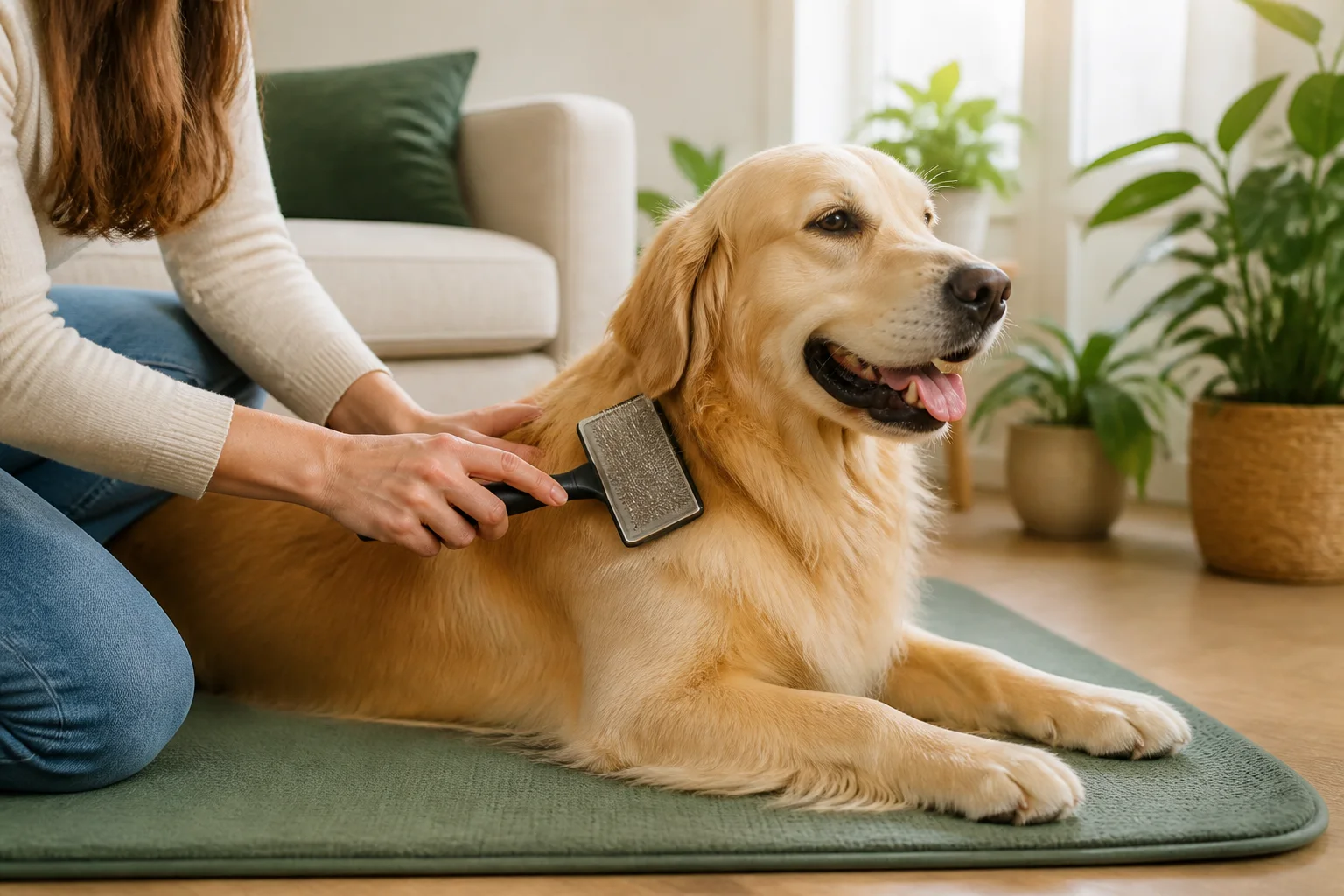
How to brush your dog between grooms
Short, comfortable brushing sessions keep the coat cleaner, reduce loose hair and help you notice changes in the skin early. The right frequency depends on coat type—not simply the dog’s size.
Choose tools for the coat
A slicker brush works well for many curly and longer coats, while a rubber curry or soft bristle brush may suit short coats. A stainless-steel comb is the best final check because it catches tangles a brush can glide over.
- •Curly or long coats: slicker brush plus metal comb
- •Double coats: pin brush or coat-appropriate rake
- •Short coats: rubber curry or soft bristle brush
Work in calm, small sections
Start where your dog is comfortable. Support the hair near the skin, brush the ends first, then work inward with light strokes. Pay extra attention behind the ears, under the collar, armpits, chest, tail and the backs of the legs.
- •Keep sessions to five or ten comfortable minutes
- •Reward relaxed behavior and offer breaks
- •Never pull repeatedly through a stubborn tangle
Know when to stop
A mat that is tight to the skin can hide moisture, irritation or sores. Cutting it at home is risky because folded skin can be pulled into the mat. Let a professional groomer assess it safely.
Contact a groomer if the comb cannot pass through the coat. Contact your veterinarian for redness, sores, odor, swelling or sudden sensitivity.