
Cats · 5 min read
Gentle coat care for cats
Cats groom themselves, but long coats, shedding, age, mobility changes and health conditions can make extra support valuable. Consent and short sessions matter more than finishing everything at once.
Start with consent
Choose a familiar, stable surface and begin with one or two strokes in an area your cat enjoys. Pause often. A flicking tail, skin twitching, flattened ears or turning toward the tool means it is time to stop.
- •Keep the first sessions under a minute
- •Pair the routine with a favorite reward
- •Never pin down or chase a cat for brushing
Use a comb in small areas
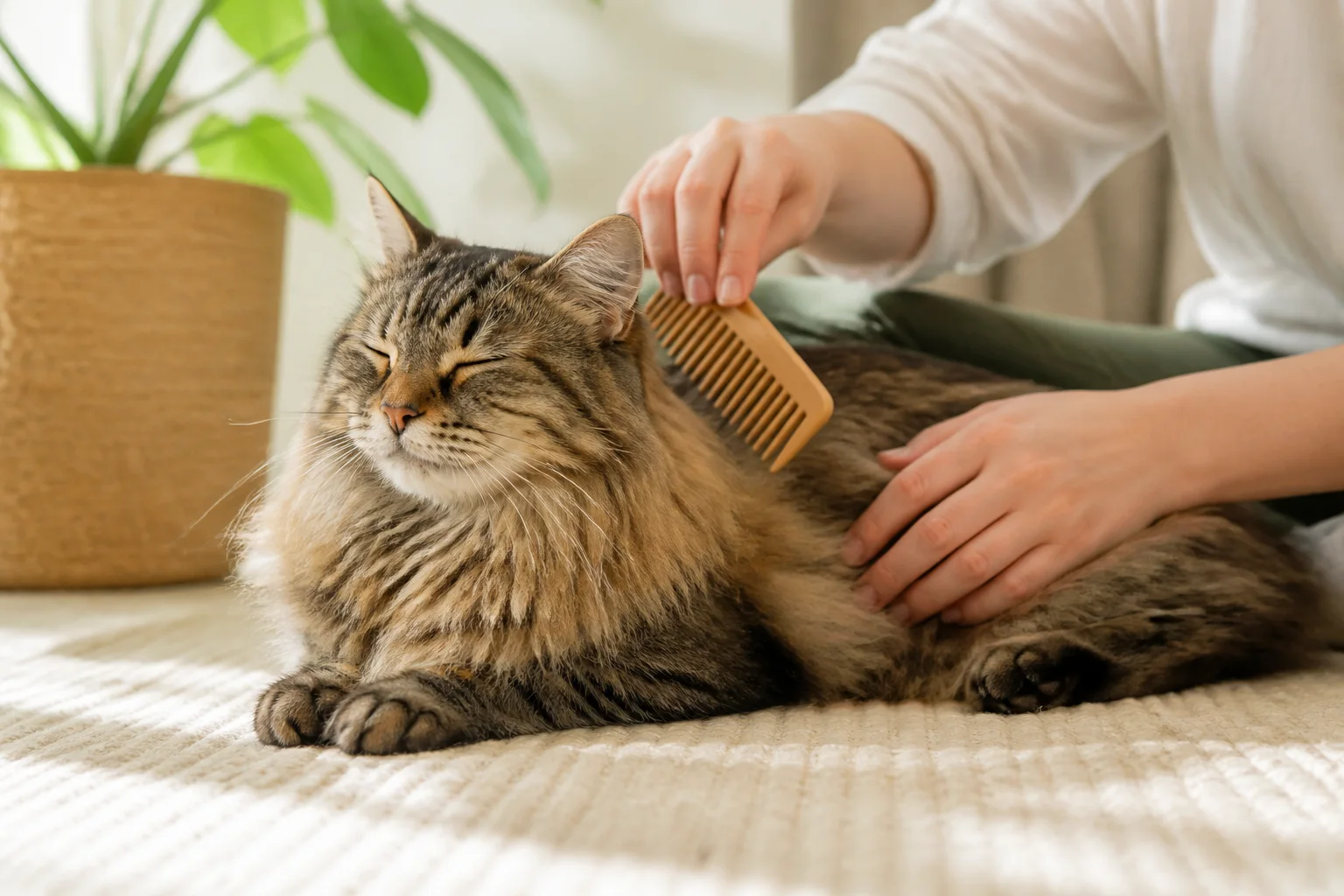
A wide-tooth comb can separate long coat gently. Support hair near the skin and work at the outer ends first. Common trouble spots include the chest, armpits, belly and hindquarters.
- •Check the skin as the coat parts
- •Keep tools away from whiskers and the face
- •Stop before your cat becomes overstimulated
Mats need professional judgment
Cat skin is thin and easily pulled into a mat. Tight mats may need careful clipping by a groomer or veterinarian. Avoid scissors and home dematting blades.
Sudden poor grooming, greasy coat, dandruff, bald spots or sensitivity can signal a health or mobility issue; contact your veterinarian.